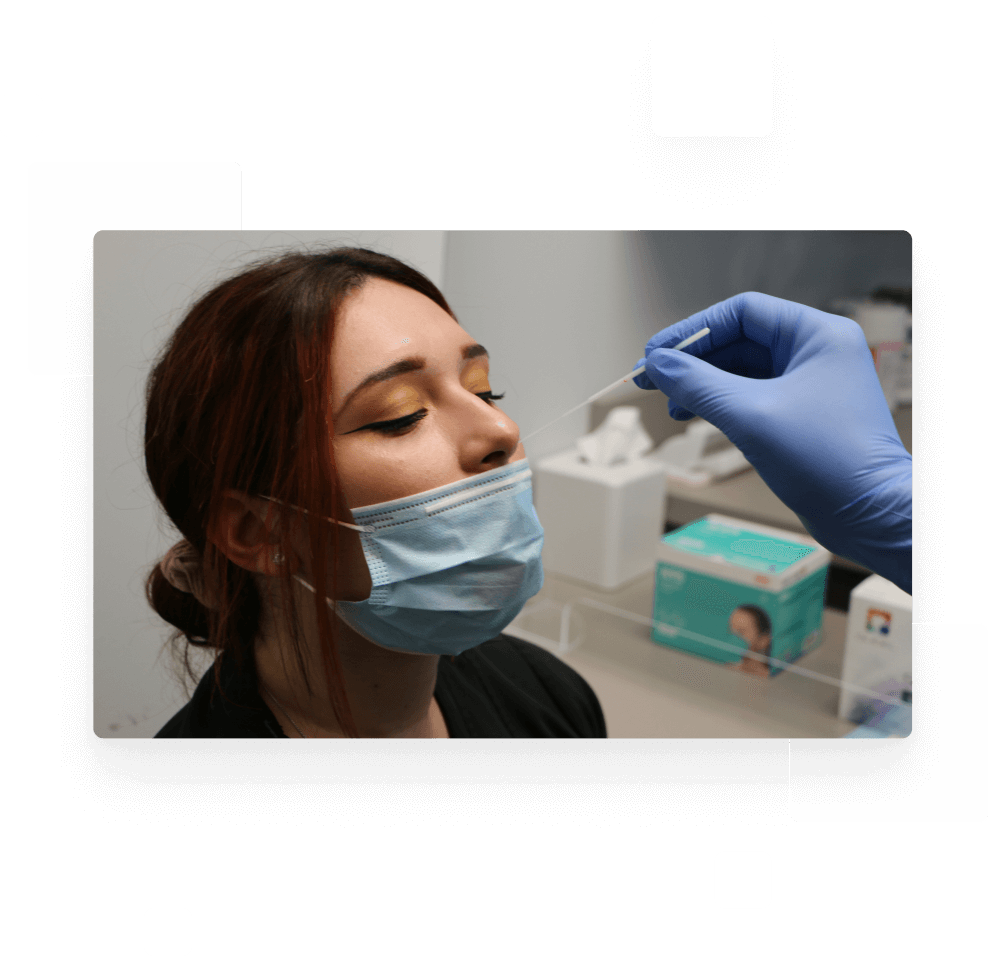
If you’re looking for quick, reliable EKG & heart monitoring without the runaround, welcome to Total Healthcare. We’re your city’s most accessible primary care option, built for busy individuals and families who want great care without long waits or insurance hassles. Our streamlined EKG & heart monitoring approach makes it easy to get answers fast: same-day appointments, flexible scheduling (early, late, and weekends), and broad insurance acceptance. Quality care shouldn’t be complicated or time-consuming, and with us, it isn’t.
What Is An EKG And How It Compares To Other Heart Monitors
EKG/ECG Basics: Electrical Signals, Leads, And Waveforms
An electrocardiogram (EKG or ECG) is a quick, painless test that records your heart’s electrical activity from the skin. Small sensors (electrodes) placed on your chest, arms, and legs capture signals that produce a waveform, the P wave, QRS complex, and T wave, that reflects how your heart beats and recovers between beats.
- P wave: your atria contracting.
- QRS complex: your ventricles contracting (the main “beat”).
- T wave: your ventricles resetting for the next beat.
A standard 12‑lead EKG views your heart from multiple angles in just 10 seconds, helping detect rhythm issues (like atrial fibrillation), effects of electrolyte changes, conduction blocks, and signs of a heart attack or reduced blood flow.
What EKGs Show Versus Continuous Monitors
A clinic EKG is a snapshot, excellent for diagnosing rhythm or conduction problems happening right now and for flagging patterns that suggest prior or ongoing heart strain. But symptoms that come and go may be missed during a 10‑second window. That’s where continuous monitors help: Holter, event, and patch devices track your heart for days to weeks, catching intermittent palpitations, dizzy spells, or fainting episodes. In 2026, consumer wearables with FDA‑cleared single‑lead ECGs can help surface rhythm concerns between visits, though they don’t replace medical‑grade multi‑lead testing when precision is needed.
Types Of Heart Monitoring: From Clinic To Wearables
12-Lead Resting EKG And Stress Test EKG
- Resting 12‑lead EKG: Done while you’re lying down. It’s fast (about 10 minutes start to finish, with only 10 seconds of recording), no needles, no downtime. Great for chest discomfort evaluation, irregular beats, medication checks, and pre‑op assessments.
- Stress test EKG (exercise ECG): You walk on a treadmill or pedal a bike while your heart is monitored. Helpful for uncovering ischemia (reduced blood flow) that doesn’t appear at rest and for assessing exercise tolerance.
Holter And Event Monitors
- Holter monitor: Worn continuously for 24–72 hours (sometimes up to 14 days), capturing every beat. Best when symptoms occur daily or every few days.
- Event monitor: Worn for weeks, recording short windows when you press a button during symptoms or when the device auto‑detects irregularities. Ideal for infrequent episodes like occasional palpitations or near‑fainting.
Patch Monitors And Implantable Loop Recorders
- Patch monitors: Thin, water‑resistant stickers on the chest worn 7–14+ days with minimal wires. Comfortable, discrete, and high yield for intermittent symptoms. Many now auto‑upload data.
- Implantable loop recorders (ILRs): A rice‑sized device placed under the skin to monitor for 2–3 years. Used when symptoms are rare but serious (e.g., unexplained fainting, cryptogenic stroke workups).
Smartwatches And Consumer Devices
Modern wearables can record a single‑lead ECG on demand and passively track heart rate, rhythm irregularity alerts, and sometimes heart rate variability. They’re useful for capturing an episode at home, trending fitness recovery, or prompting a medical visit if an alert repeats. Limitations: fewer leads, motion artifacts, and potential false alarms. Think of them as helpful scouts, your clinician still confirms findings with medical‑grade tests.
Who Needs Monitoring And When To Get Tested
Symptoms And Red Flags That Warrant Testing
Get checked promptly if you notice:
- New chest pain, pressure, or tightness, especially with exertion or stress
- Unexplained shortness of breath, decreased exercise tolerance
- Palpitations (racing, fluttering, skipped beats), dizziness, or fainting
- Swelling in legs with fatigue or breathlessness
- Rapid or very slow pulse, or irregular beats picked up by a watch
- High blood pressure with symptoms, or medication side effects affecting heart rate
If symptoms are severe (crushing chest pain, sweating, nausea, sudden breathlessness), call emergency services.
High-Risk Groups And Screening Scenarios
- Personal history of heart disease, prior heart attack, heart failure, or known arrhythmias
- Family history of early heart disease or sudden cardiac death
- Conditions like diabetes, chronic kidney disease, or sleep apnea
- Athletes with concerning symptoms or a family history of cardiomyopathy
- Pre‑operative evaluations, chemotherapy monitoring, or medication checks (e.g., drugs that prolong QT)
- Post‑COVID or long‑COVID patients with ongoing chest discomfort or palpitations
If you’re unsure, a quick conversation with a clinician can match your symptoms and risk with the right test, often starting with a resting EKG.
What To Expect And How Results Are Interpreted
Preparation, Procedure, And Safety
At Total Healthcare, EKG & heart monitoring are designed around your schedule. For a resting EKG, you’ll remove clothing from the waist up, and electrodes will be placed on your chest, arms, and legs. It’s painless, no shocks, just sensing. The test itself takes about 10 seconds: setup and review bring the total visit to roughly 10–15 minutes. For monitors, we’ll prep your skin, position the device, and explain wear instructions. You can go about your day, most patches are shower‑friendly.
How Data Is Collected, Reviewed, And Reported
- In‑clinic EKG: Captured instantly and reviewed by a clinician in the same visit.
- Holter/patch/event: Data is recorded over days to weeks. Many devices auto‑sync to secure portals. Our team reviews trends, flags episodes, and correlates them with your symptom diary or timestamps from button presses.
- Reporting: You’ll get a clear explanation in plain language, what we saw, what it means, and what comes next. Results can be shared with your cardiologist on request.
Reading Results: Normal, Borderline, And Abnormal Patterns
- Normal: Regular rhythm (often sinus), normal intervals (PR, QRS, QTc), and expected wave shapes.
- Borderline: Minor variations that may be normal for you, medication‑related, or worth watching. We’ll explain whether follow‑up is needed.
- Abnormal: Arrhythmias (AFib, SVT, VT), conduction blocks, ischemic changes, or signs of electrolyte or structural issues. Based on findings, next steps may include labs, echocardiogram, stress imaging, medication adjustments, or cardiology referral.
Benefits, Risks, And Limitations To Know
Accuracy, Wear Time, And Diagnostic Yield
- EKG: Highly accurate snapshot of present‑moment rhythm and conduction. Best for acute concerns.
- Holter/patch/event: Higher yield for intermittent symptoms because they watch longer. More data means more chances to catch the culprit.
- ILR: Longest view for rare but concerning episodes.
The right tool depends on symptom frequency, severity, and your risk profile.
False Positives, False Negatives, And Next Steps
Any monitor can miss a fleeting episode (false negative) or flag noise as an issue (false positive). Wearables, in particular, can over‑alert during movement or if the band is loose. If we see an alert but your comprehensive data looks normal, we’ll balance caution with common sense, often repeating a test, trying a longer monitor, or using an additional modality (e.g., echocardiogram). If a true problem is found, timely treatment, medication, lifestyle changes, or procedures, can dramatically reduce risk.
Privacy, Data Sharing, And Alerts Fatigue
Modern devices encrypt transmissions, and your clinical data stays in your medical record. You control who sees wearable exports. If alerts become noisy, we’ll help adjust thresholds and frequency so truly important notifications stand out. The goal is peace of mind, not constant anxiety.
How To Choose The Right Option With Your Clinician
Questions To Ask And Decision Factors
- How often are my symptoms happening? Daily vs. weekly vs. rare
- What are we trying to rule in or rule out, arrhythmia, ischemia, medication effect?
- What’s the shortest test that’s likely to catch my symptoms?
- Can I keep exercising, showering, and working while I wear it?
- How will results change my care plan?
Your answers guide whether a quick 12‑lead EKG, a 48‑hour Holter, a 14‑day patch, or an implantable recorder makes the most sense.
Costs, Insurance, And Access Considerations
At Total Healthcare, we keep access simple: same‑day appointments for EKGs, rapid monitor placement, and broad insurance acceptance. Before testing, our team verifies coverage and out‑of‑pocket estimates so there are no surprises. If you don’t have insurance, we offer transparent self‑pay pricing and installment options. Most patients leave their visit with the test done, or the monitor already on, so you’re not stuck waiting weeks for answers.
Conclusion
Your heartbeat tells a detailed story, EKG & heart monitoring help translate it. Whether you’re chasing down palpitations, confirming a smartwatch alert, or clearing up chest discomfort, the right test can provide clarity fast. At Total Healthcare, we’ve streamlined the entire process with same‑day appointments, flexible scheduling, and comprehensive insurance acceptance so you get answers without the wait. If you’re ready for straightforward, patient‑first care, book now, online in under a minute, or call us today for a same‑day spot.